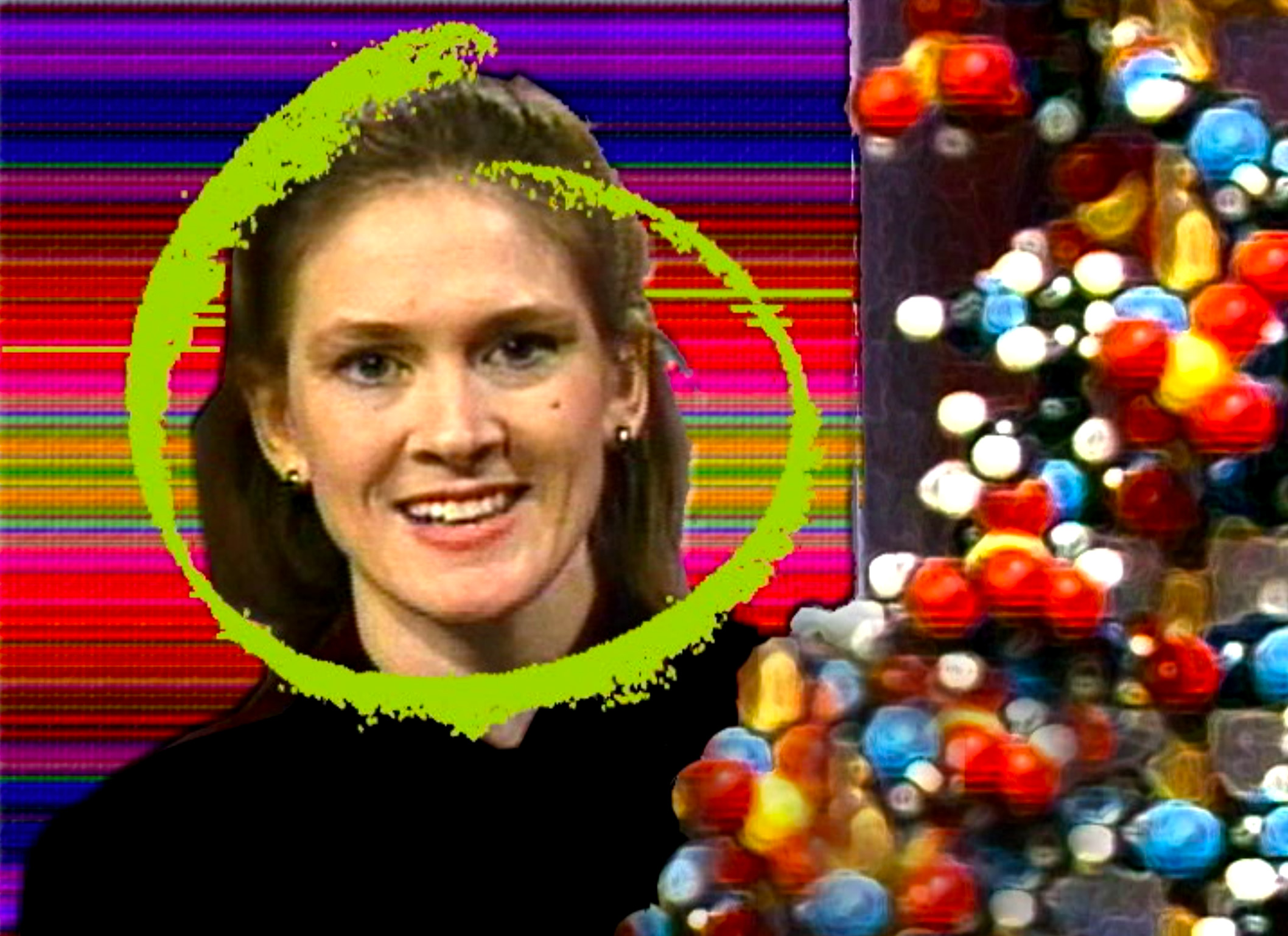
The creator of Professor Blue shows up live on this interview. Plus, Professor Blue makes a quick appearance!
I’m re-posting this so that it stands out on its own. The Department of Environmental Protection in Connecticut is having an art contest for kids! You don’t even have to live in Connecticut to enter the contest!
All children from kindergarten through fifth grade are eligible to enter an original drawing, painting, or sketch of a turtle native to Connecticut.
- Entries will be judged in three categories: K-1st grade, 2nd-3rd grade, and 4th-5th grade.
- Prizes will be awarded in each category for 1st, 2nd, 3rd, and honorable mention.
- All entries will be displayed at the Sessions Woods Conservation Education Center, in Burlington, for Year of the Turtle Day, scheduled for June 26, 2011, from 1:00-4:00 PM.
- Full details and entry information are available on the official entry form (PDF) or by calling the Wildlife Division at 860-675-8130 (Mon-Fri, 8:30 AM-4:30 PM).
More info here:
http://www.ct.gov/dep/cwp/view.asp?a=2723&q=473472&depNav_GID=1655
What do we know about turtles? Hard shell to protect the body. Check. Four legs that don’t move so fast. Check. Able to retreat into the shell for protection from outside forces that wish to do it hard. Check. Un-check?
Well, PARC – Partners in Amphibian and Reptile Conservation – has called this year – 2011 – the Year of the Turtle because they would like people to pay close attention to turtles. Why? They “…are disappearing from the planet faster than any other group of animal. Today, nearly 50% of turtle species are identified as threatened with extinction. “
Their hard shells cannot protect them from loss of their habitats, invasive diseases, cars running them over, people taking them as pets, and so much more.
There are things we can do to slow down the loss of the turtle population like not taking turtles out in the wild as pets, and not destroying their nests.
We have to not behave like a turtle to help protect the turtle!
Read more here: http://parcplace.org/news-a-events/year-of-the-turtle.html
Also the Department of Environmental Protection in Connecticut is having an art contest for kids. You don’t even have to live in Connecticut to enter the contest!
All children from kindergarten through fifth grade are eligible to enter an original drawing, painting, or sketch of a turtle native to Connecticut.
- Entries will be judged in three categories: K-1st grade, 2nd-3rd grade, and 4th-5th grade.
- Prizes will be awarded in each category for 1st, 2nd, 3rd, and honorable mention.
- All entries will be displayed at the Sessions Woods Conservation Education Center, in Burlington, for Year of the Turtle Day, scheduled for June 26, 2011, from 1:00-4:00 PM.
- Full details and entry information are available on the official entry form (PDF) or by calling the Wildlife Division at 860-675-8130 (Mon-Fri, 8:30 AM-4:30 PM).
More info here:
http://www.ct.gov/dep/cwp/view.asp?a=2723&q=473472&depNav_GID=1655
This You Tube(r) video shows how oil on your hands is no good for fog. Water and oil do not mix!
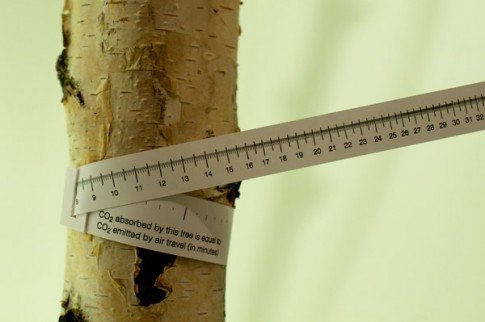
Hug a tree and what do you get? Splinters from the bark? A happy feeling?
Maybe.
But if you hug a tree while holding a Tree-Tape, you can get both the happy feeling of splinters and also a measurement of how much carbon the tree is removing from the atmosphere! Bonus!
What is carbon? Carbon is an element that is present in every living thing. Scientists call Carbon “C”. Think of it this way. Your parents named you James, but call you Jim. Or Gertrude but call you Trudy. Jim, James, Gertrude, Trudy, Carbon, C, right?
When C gets changed into a gas state, it becomes carbon dioxide. Carbon dioxide is also known as CO2. Scientists believe that we humans are putting too much CO2 in the atmosphere by changing the state of C from things like coal and petroleum, burning it to produce electricity and power cars, planes, and so on, and releasing the CO2 into the atmosphere.
So many activities create CO2. Making cheeseburgers. Eating candy bars. They require carbon to be burnt and released, because so much effort is required to make candy, make a burger.
CO2 and C are necessary to live. But too much CO2 is a waste. It is trouble!
Here is an interactive map to see more about CO2 on the planet:
http://www.breathingearth.net/
But trees, ah trees! Trees use photosynthesis to take CO2 out of the atmosphere. They produce oxygen as their waste gas, which is no waste for us. But they store C in their trunks. There it stays until something like a forest fire burns the tree, and then C is released back into the atmosphere as CO2.
Impress your friends. Use the tree tape to measure how much CO2 that tree in your back yard balances out the C that is used to make a cheeseburger. Tell them, “I am conducting a very important study and need to get data about the junk in the trunks.”
Hey Kids!
Learn about marine biology, coastal ecology, oceanography, conservation and more at BOAT CAMP in Newburyport Massachusetts this summer, 2011.
BOAT CAMP’s week long program aboard the Erica Lee explores the coastal ecology of Ipswich Bay and the Gulf of Maine through a variety of fun daily activities, all of which are decided upon the day’s best weather predictions and conducted according observed weather, tide and sea states. Above all else, we focus on keeping kids warm (or cool!), safe and happy, and we utilize both the Erica Lee and BOAT CAMP Inc.’s ocean education center to make the best of New England’s changeable weather in order for kids to experience a fun, positive boat-based summer program.
They’ve got 3 spots available for kids 9-12 for August 15 – 19.
http://www.boatcamp.org/programs/kids-9-12/
What would you call this?
In some places, like Chicago or St Louis, people call this pop. In other places like Philadelphia, people would call it a soda. We’ve even heard people in Massachusetts call this tonic.
There’s no risk having different ways of naming something like soda pop. It’s no big deal when you buy something to drink to go with your sandwich while you’re visiting the museum of science. “Pop? You mean soda?” the lady at the cash register asks. “OK, that’ll be $1.25.”
See? Easy.
But talking about using measurements can be tricky.
Your mom goes to the gas station and fills up the car with 10 gallons of gas. Your father puts a 12 ounce sirloin steak on the grill. Gallons and ounces are a couple of examples of how we measure stuff in the US. We use a system that was based on the Imperial system from England but changed slightly.
Here’s how Americans used measurements in the time of Thomas Jefferson:
Two mouthfuls are a jigger; two jiggers are a jack; two jacks are a jill; two jills are a cup; two cups are a pint; two pints are a quart; two quarts are a pottle; two pottles are gallon; two gallons are a pail; two pails are a peck; two pecks are a bushel; two bushels are a strike; two strikes are a coomb; two coombs are a cask; two casks are a barrel; two barrels are a hogshead; two hoghead are a pipe; two pipes are a tun-and there my story is done!
from http://library.thinkquest.org/J002831/missionmetric.htm
We need to be able to have a standard of measure so that if a grocery store buys a bushel of corn from Iowa, and it gets delivered to Washington State, that everyone will know exactly how much corn they’ll be getting, as long as it’s in the US.
The same is true at a hospital. The doctor tells the nurse to give you 10 ccs of some medicine. CC means cubic centimeter, which is part of the metric system, or SI, the International System of Units. It’s a completely different way of measuring than the American standard. So the doctor has two ways of measuring inside his or her head. At the gas pump? American. At the hospital? Metric.
If you’re a scientist, you, too, work in the metric system. It does not matter if you’re a scientist in Brazil, Bangladesh, Spain, Canada, or the US. Scientists use the same system. But Americans who have other jobs like carpenter, receptionist, police officer, all use the American system of measurement. Right now there are only three countries in the world that do not use the metric system for everything.
The countries on this map (courtesy of Kate Sedgwick at Matador Nights) in pink are the United States, Liberia, and Burma. Everybody else uses the metric system for everything, steaks and gasoline, included.
Will this ever change?
The You Tube(r) video Once Upon a Tide presents a different kind of fairy tale.
Listening to the sound a seashell makes, a real living girl enters into a sad and beautiful cartoon world of the ocean. The storyteller in the video says, “you might find it hard to believe but I assure you it’s true.”
You see underwater that there is a huge world we do not know much about. The oceans have populations of different animals, locations, light, its own kind of environment. It is different than what we human live above ground. But what we do on land and how we behave directly affects the oceans. And what goes on in the oceans directly affects the weather. Which then directly affects us humans on land. So if the oceans suffer, so will we.
Click here to see –>Once Upon A Tide
Oceans cover more of the earth’s surface than rocks and dirt do. When you look at a map of the world, notice how much water there is, compared to the land.
Oceans are very deep. The lower you go into the water, the darker it gets because the sunlight from above can no longer penetrate.
Morning Earth explains:
Life in the ocean that lives below the sunlight penetration lives in a three dimensional blackness. They can move in any dimension, but have few clues about where because there are zero landmarks, or better, signs to tell them where they are. It is hard for gravity-bound beings like us to imagine free floating all the time. No autotrophs (self-feeders) live here–there is no light to photosynthesize.
When we scuba dive to explore this complex world, we are limited by our bodies, even if we have very good oxygen tanks to breath. We experience limits that we don’t have when we’re out of the water. The lower we swim down and down into the ocean, the more our bodies feel pressure on our organs. And at some point our bodies simply cannot dive lower because the pressure is too much.
So, scientists employ other methods to go further down to explore, using robots and submarines with cameras, and are able to find the smallest of organisms that you cannot see without the help of a microscope. You might take a look at drops of water taken from these depths and not be able to see anything with just your eyes. Look at the water using a microscope, and you will truly see life where you could not see it before.
I bet you have never thought of a fairy tale as a microscope before, right?
Germs, sometimes known as Bacteria, are alive, but you can’t see them. Bacteria are groups of tiny organisms that have only one cell. They are on the ground, in the air, on your shoelaces, the handle to the refrigerator, the tip of your nose. They are all around us.
Some bacteria can cause diseases but not all of them. Humans actually need some kinds of bacteria to live!
To learn more about Germs go to this website:
http://kidshealth.org/kid/talk/qa/germs.html
To hear the latest Bacteria dance song, sweeping across…my computer…click on the You Tuber video below. I like to think of the song as what Germs would sound like if they could sing.
Update: Check out these details on bacteria
A very easy way – with your mom or dad’s permission – to make your own pair of 3D glasses!
check it out -